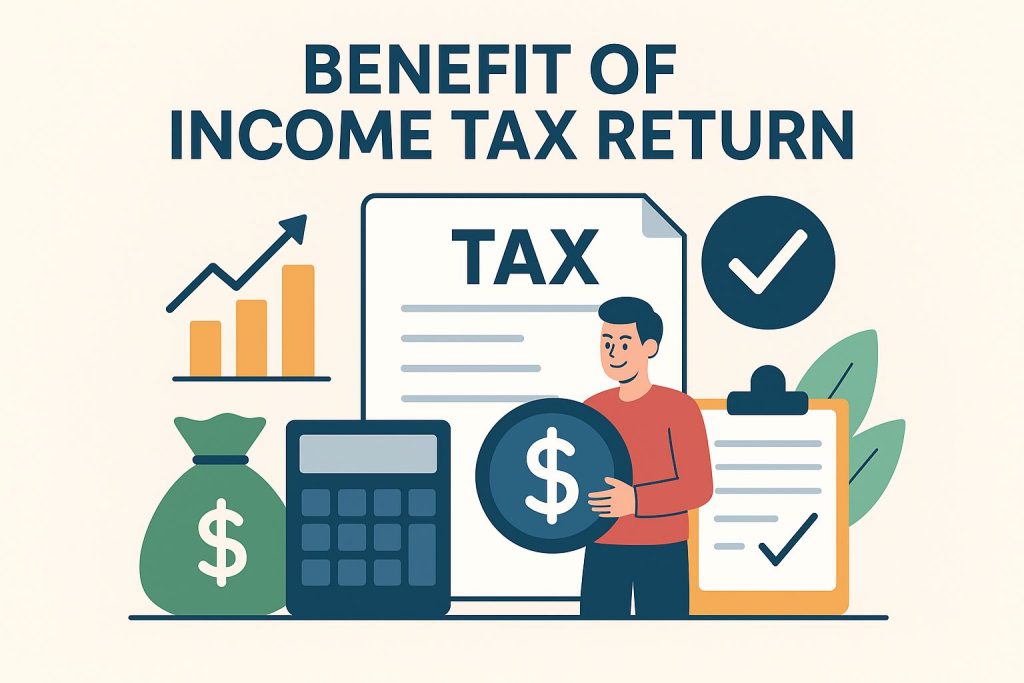
Proof of income and address: An ITR is a valid legal document that can be used as proof of both income and address for various financial and official purposes.
Easy loan approvals: Banks and financial institutions often require ITRs to assess your financial stability and repayment capacity when you apply for a home, car, or personal loan.
Claiming tax refunds: If you have paid excess tax through Tax Deducted at Source (TDS), you can claim a refund by filing an ITR.
Carry forward losses: You can carry forward capital losses or business losses to future years to offset them against future income, but only if you file your ITR on time.
Visa processing: Many countries require copies of your ITR to assess your financial stability during the visa application process.
Avoiding penalties: Timely filing helps you avoid penalties, interest on unpaid taxes, and other legal repercussions from the income tax department.
Higher insurance coverage: Insurance companies often ask for ITR records to determine your income, which can help you get higher coverage for term insurance plans.
Business opportunities: For entrepreneurs and startups, a filed ITR demonstrates financial transparency and may be required for obtaining government tenders or securing funding from investors.
Financial transparency: Filing an ITR promotes financial transparency by documenting your income and taxes, which fosters trust with financial institutions.
Tushar Tyagi,
Rupesh Mangal & Associates
CHARTERED ACCOUNTANTS